Sangre y SueñosHistory
Español← Back to the front page

Chronicle of the city · server canon

Los Santos, chronicle of a city

This is the story of our Los Santos: how it became what it is, which seats of power are empty today, who is fighting for them and where someone who has just stepped off the plane fits in. It is the server's canon: the welcome, the handbooks and the announcements all rest on it.

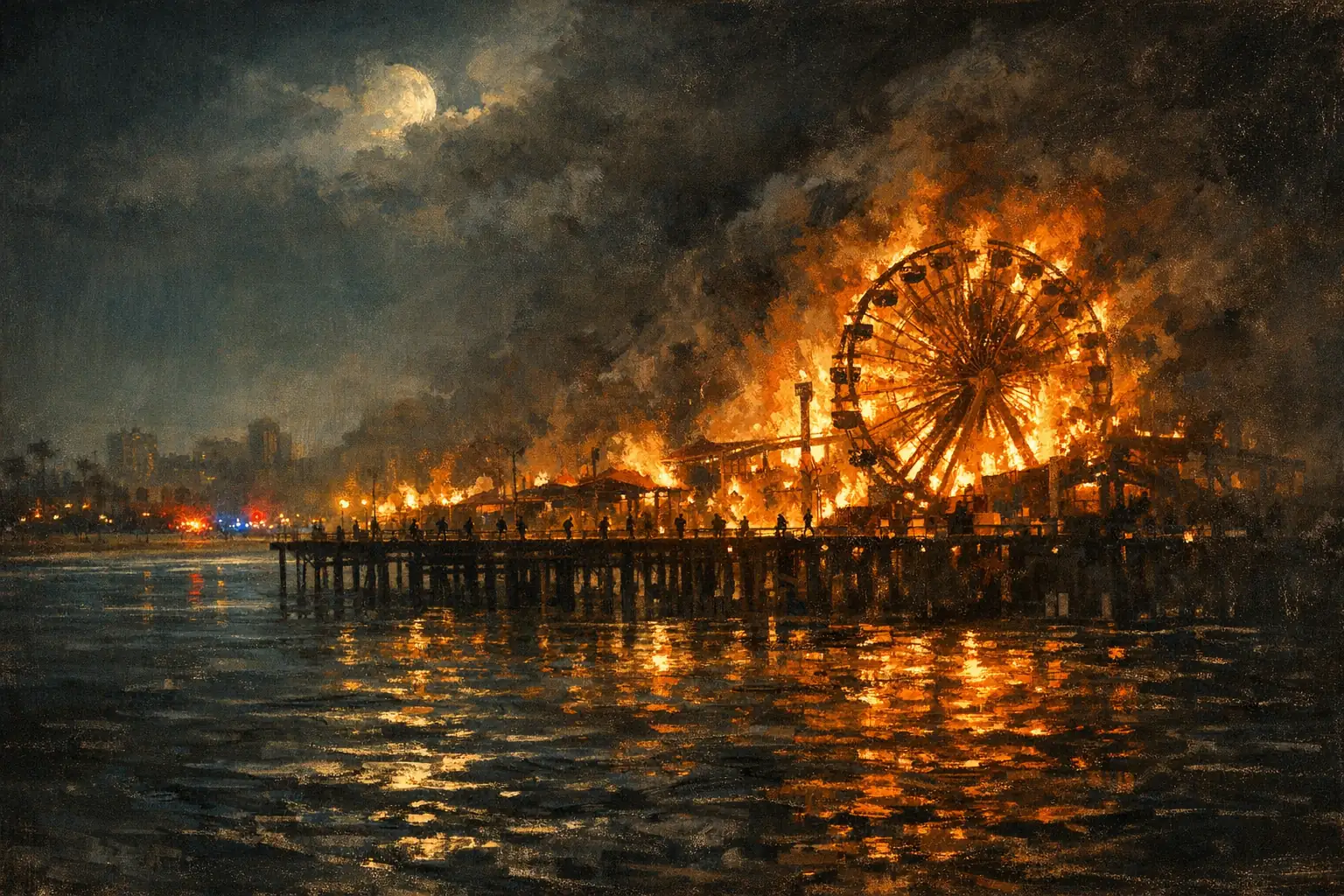
A wooden pier burning at night over the bay, the ferris wheel in flames reflected in the water
The Night of the Pier. Del Perro Pier, 14 October 2019.

Chapter 01

How we got here

Five eras, from a port with a city attached to a Gobernación without a governor.

Era I1950
–1979

The city of the docks

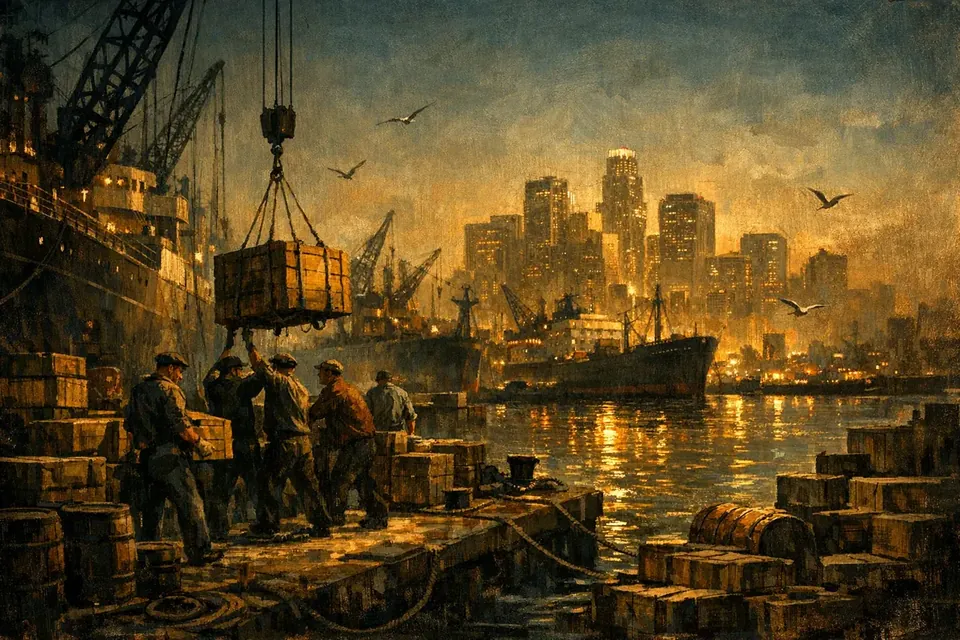
Longshoremen unloading crates on a dock at dusk, with ships, cranes and the city behind
The dock yearsWhoever controlled the unloading controlled the price of everything else.

Before Vinewood, before the towers of Pillbox Hill, Los Santos was a port with a city attached. Everything that came into Southern California went through its docks, and whoever controlled the unloading controlled the price of everything else.

In 1958 three families founded the Los Santos Port Consortium (Consorcio Portuario de Los Santos): the Vance family (the shipping line, the ships), the Galloways (cranes, stevedoring and, later, the construction company) and the Duartes (customs and customs brokers: the paperwork). A fourth partner, the Kessler Trust bank, put up the money and kept the books. For twenty years they shared the port without fighting, because there was more than enough for all four.

On the other side of the dock stood the Longshoremen's Union, Local 14. Without its men not a single container came off a ship, and its historic boss, Walter "Big Walt" Riordan, knew it: he charged a toll on every ship, in cash and with no receipt. The Riordans never owned anything, but everything passed through their hands.

In 1974 the North Terminal (Terminal Norte) opened on Elysian Island. The money that came in that decade built downtown, paid for the Vinewood studios and left the families' names carved on the façades. It is the time the old-timers still call the dock years.
Era II1980
–1991

Concrete and silence

In 1983 an earthquake split the south of the city. A huge rebuilding fund arrived, the Rebuild Plan (Plan Reconstruir), and Governor Harlan Pierce ran it. For six years they opened bridges that already existed and hospitals that were never finished. The contracts almost always went to Galloway Construcciones, the payments went through the Kessler Trust, and a share came back, clean, into the pockets of half the cabinet.

In 1989 a Kessler accountant, Ana Beltrán, brought the Blue Book (Libro Azul) to light: the Rebuild Plan's second set of books. It was the Pierce scandal. The governor resigned and half the cabinet fell with him; Pierce left the city on a yacht and never came back. Beltrán was found dead in 1990 in her apartment in Rockford Hills. The case is still open.

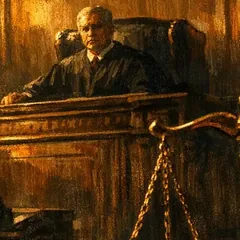
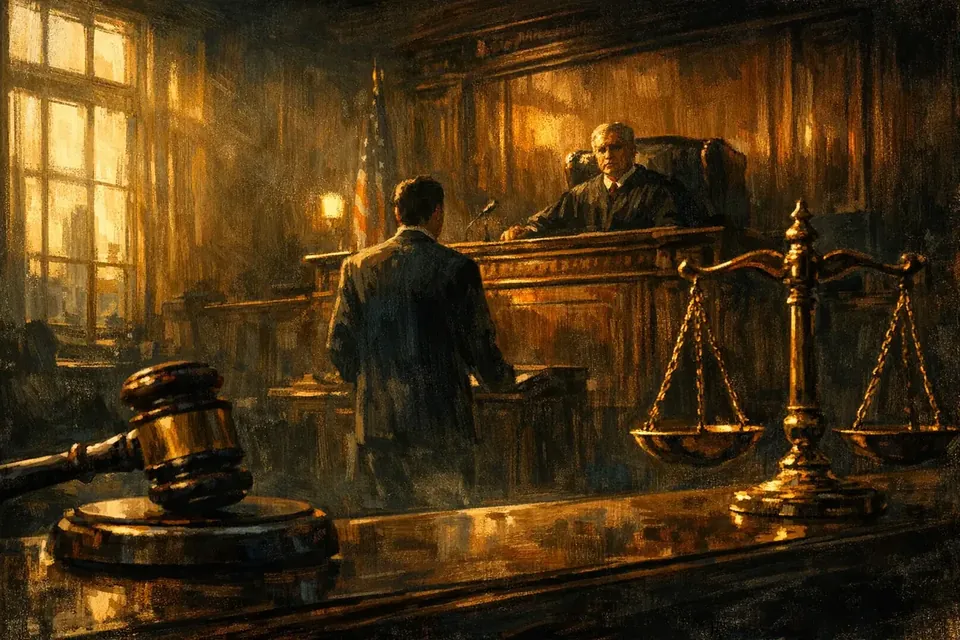
A dark wood courtroom with a judge at the bench
The order of 1990The Los Santos Superior Court opened that year.

Out of those ruins came the legal order the city knows today:

  • 1990The Clean-Up Act (Ley de Saneamiento) rebuilt the Gobernación: governor, cabinet, and the Department of Justice (DOJ) as its judicial branch, with prosecutors, judges, notaries and registries. The Los Santos Superior Court opened that year.
  • 1991The old Metropolitan Police, which for decades had taken money from the port and the union, was disbanded after the night of Innocence Boulevard, when it opened fire on a march of striking longshoremen (seven dead).
  • 1991The LSPD was born at the Mission Row station, with a new badge, new rules and a charter of principles that cadets still sign: the Mission Row Charter. Its first commissioner was Irene Walsh.

The city learned two things in those years: that port money doesn't launder itself, and that there is always someone willing to launder it.

Era III1992
–2012

The routes

While the city was cleaning up its face, out in the desert someone was opening roads.

Tomás Ferreira, "the Old Man" (el Viejo), started in the mid-nineties with small-time smuggling across the Alamo Sea. By 2000 he had dirt airstrips in Sandy Shores, in Grapeseed and at the old McKenzie airfield, unregistered light planes and a network of sheds across Blaine County. What landed in the desert came into the city by truck… and left through the port.

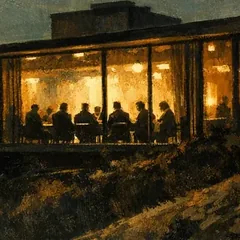
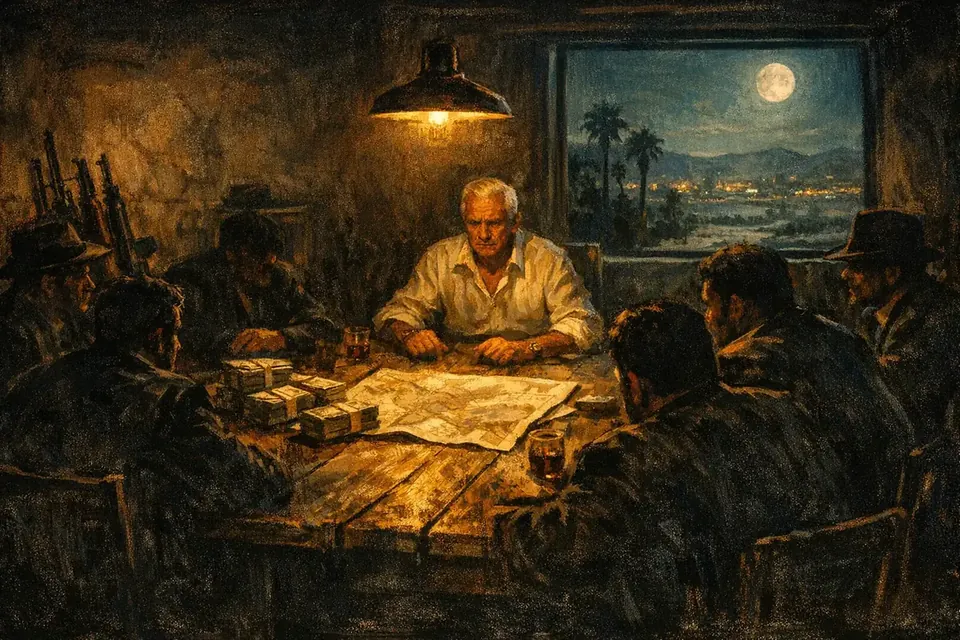
A night meeting in a desert house: men around a table with a map and money, an older boss at the head
The Alamo Agreement, 1998A table that never officially existed.

That is where the two worlds met. In 1998, at a table that never officially existed, the Alamo Agreement (Acuerdo del Álamo) was sealed: the Ferreiras brought it in, the Duarte brokers made sure the containers were never opened, and the port's construction companies turned dirty money into buildings. The Galloways never touched a gram, but they built half the city with money that wasn't theirs.

Between the Ferreiras and the street a new layer appeared: the Vespucci Table (la Mesa de Vespucci), four families who sat in the back room of a restaurant in Vespucci Canals to divide up the business. The Riordans (the union), the Sarnos (gambling and loans), the Castells (transport) and the Iturbes (the night: bars, clubs, security). They produced nothing: they laundered, lent, collected and guaranteed. They were the city's first modern mafia.

And down below, in Davis, Strawberry, Chamberlain and Rancho, the gangs grew: neighbourhood kids who sold on street corners what came down from the desert and killed each other over blocks that belonged to no one. Nobody remembers their names from back then: almost none of them made it to thirty.

The 2008 crash left half the port out of work. The gangs had never had so many willing hands.

Era IV2013
–2019

The Night of the Pier

Old Man Ferreira died in 2016, of old age, which in his line of work is close to a miracle. He left the business split between his children: Inés Ferreira, who kept the desert routes, and Nicolás "Nico" Ferreira, who ran the way out through the port. They hated each other politely.

On 14 October 2019, a big Ferreira shipment was due to change hands on Del Perro Pier, at night, with the ferris wheel switched off. There were two buyers: the Vespucci Table and someone from outside whom nobody ever identified. And there was a traitor. Someone warned each buyer that the other was coming to rob them, and told the LSPD where everything would be.

It was the Night of the Pier (la Noche del Muelle). The shooting started on the pier and spread through Vespucci until dawn. The pier burned; the whole bay watched the ferris wheel go up in flames. Twenty-three dead, among them Inés Ferreira, Tony Sarno and four police officers. Nico Ferreira vanished that same night. The shipment was never found.

Nobody ever found out who the traitor was. Some say it was someone from the port, some say it was a cop, and some say they left the city that same week, like so many others who left without saying goodbye.

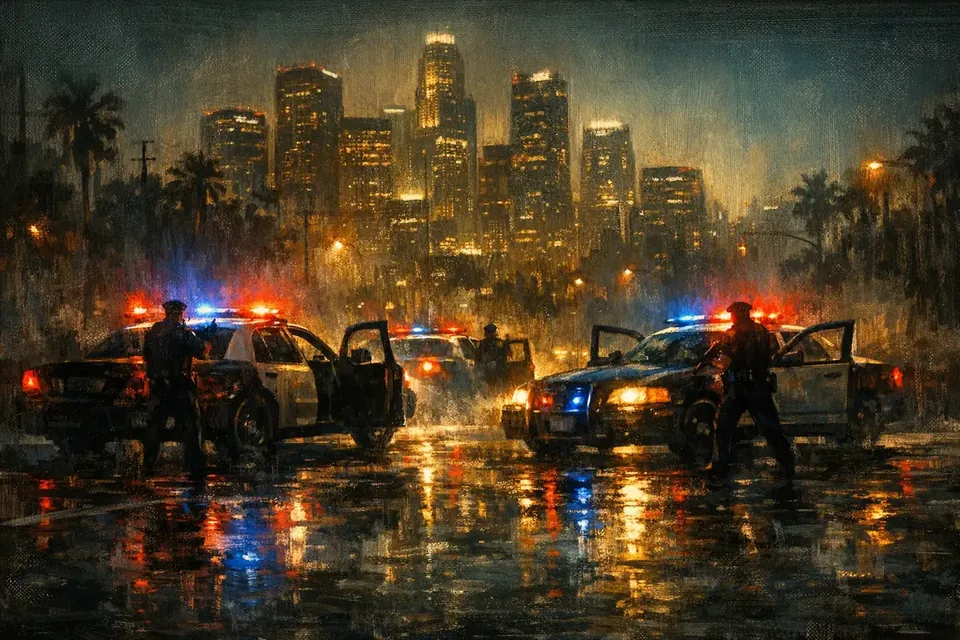
Police cruisers with their lights on blocking a wet street at night
The Mission Row PurgeEleven officers were on the Ferreira payroll.

What came next was worse than the shootout:

  • 2019The Ferreira cartel fell apart. The desert routes were left without an owner.
  • 2019–20The Mission Row Purge. The investigation into the Night revealed that eleven officers were on the Ferreira payroll. The LSPD chief at the time, Dale Mercer, resigned; three officers went to prison and two were never seen again.
  • 2019The Vespucci Table lost two seats. Tony Sarno died on the pier; the Castells sold everything and moved to another state.

Era V2020
–today

The Ladder

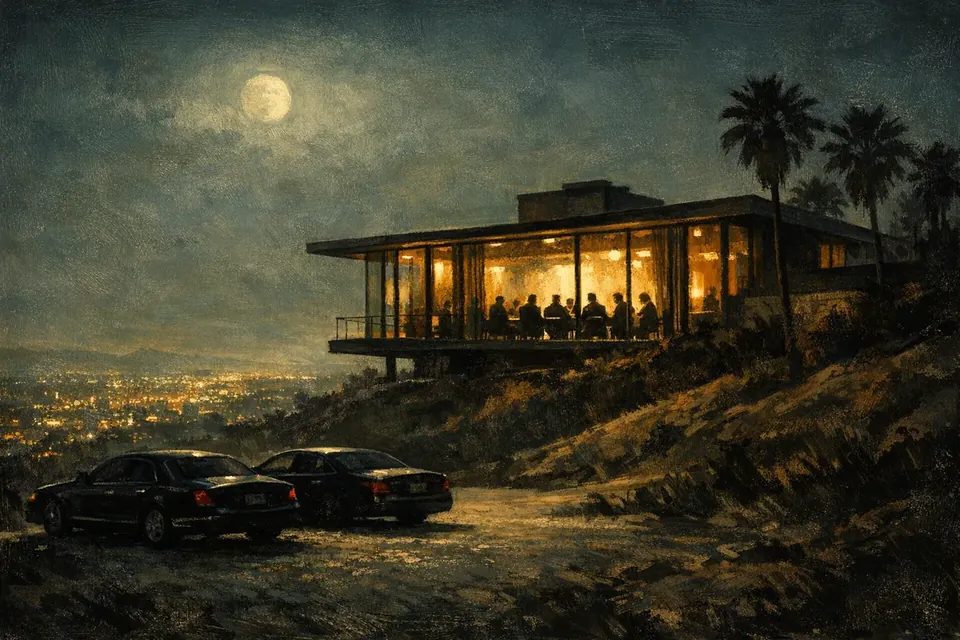
A lit modern mansion on a hilltop at night, men gathered around a table inside and the city below
The Casa de la Cima, February 2020Nobody signed anything.

After a year of small wars over the leftovers, those still standing sat down at the Casa de la Cima, the hilltop mansion next to the Vinewood sign, in February 2020. Nobody signed anything. What came out of that meeting is the Ladder (la Escalera), the pact everyone keeps and no one admits to:

At the top, the cartelsbring it in · two at mostThey produce and distribute. The desert can't support more.
In the middle, the mafiaslaunderFew, loyal, well connected: the money goes in dirty at the bottom and comes out clean through the port and the banks.
At the bottom, the gangsfight for the streetCorners, turf, dealing.

Nobody attacks upwards. Whoever wants to climb a rung allies with someone above and asks for permission.

And permission comes from the Gobernación. At the Casa de la Cima there was a cabinet man sitting in a corner, and ever since, the Gobernación has acted as referee: it approves who climbs, when and at whose expense. Officially, so the Night of the Pier never happens again. In the corridors they say every promotion has a price and that the Gobernación charges for its own rung too.

The years that followed were an armed peace. The LSPD rebuilt itself with new people and a budget that is never enough. The port went back to work. And the Gobernación, the same one that had sworn to clean up the port in 1990, filled up with port names all over again.

  • 2024The city's only serious newspaper, El Diario del Pacífico, published the North Terminal case: the terminal's concession had been renewed for thirty years to a company behind which stood, once again, the Galloways, the Kessler Trust and a firm linked to Governor Richard Aldana. The Diario closed three months later "for financial reasons". Its editor, Clara Montiel, lives abroad.
  • 2025Frank Riordan, Big Walt's grandson and boss of Local 14, went to prison for extortion, and from his cell he can't put anyone in charge. Judge Margaret Hale, who was handling the North Terminal case, died in a traffic accident on the Great Ocean Highway that nobody quite believed. Her seat on the Superior Court is still empty.
  • March 2026With the North Terminal case reopened, Governor Aldana left the city "on official business" and never came back. The Gobernación runs on an interim cabinet, and the LSPD, whose chief the Gobernación appoints, on a provisional command nobody knows how long will last.

This is the city you arrive in today.

Chapter 02

The empty seats

The Ladder still stands, but it has gaps. These are the positions of power that have no owner today, or have one who can't hold on. They are the players' way in: they are there for someone to take.

Empty

The desert routes

Why it's emptyThe Ferreiras fell apart in 2019. Since then the desert has been used piecemeal, with nobody running it.

What it givesThe top of the Ladder. There is room for two cartels at most.

Empty

Two seats at the Vespucci Table

Why it's emptyTony Sarno died on the pier; the Castells left. The Iturbes and the remaining Riordans aren't enough to hold the Table up.

What it givesThe city's laundering and the deals nobody signs.

Empty

Local 14 (longshoremen)

Why it's emptyFrank Riordan is in prison and has no successor.

What it givesWhoever runs the union decides what gets unloaded, when, and who looks the other way.

Empty

The North Terminal concession

Why it's emptyThe North Terminal case left it on hold; the Vances sold their share years ago.

What it givesControl of the port: what comes in and what goes out.

Interim

The governorship

Why it's emptyAldana fled in March 2026; there is an interim cabinet.

What it givesLaws, appointments, refereeing the Ladder.

Provisional

Command of the LSPD

Why it's emptyProvisional since Aldana left, with the Purge still fresh.

What it givesThe city's police and its direction.

Empty

A seat on the Superior Court

Why it's emptyJudge Hale died in 2025.

What it givesThe big cases, starting with North Terminal.

Empty

The Chamber of Commerce

Why it's emptyIts president resigned when North Terminal came out.

What it givesBusiness's voice before the Gobernación.

Empty

The press

Why it's emptyEl Diario del Pacífico closed in 2024.

What it givesTelling (or burying) what happens.

Unclaimed

The street

Why it's emptyMost of the turf has no owner.

What it givesCorners, dealing and the door to the Ladder.

None of this is handed out. Legal seats are earned through roleplay and assigned by the Gobernación or the staff; illegal ones, through story, and organizations are assigned by the administration (see what's open).

Chapter 03

The fight for control, on three fronts

What a player does on one front moves the other two.

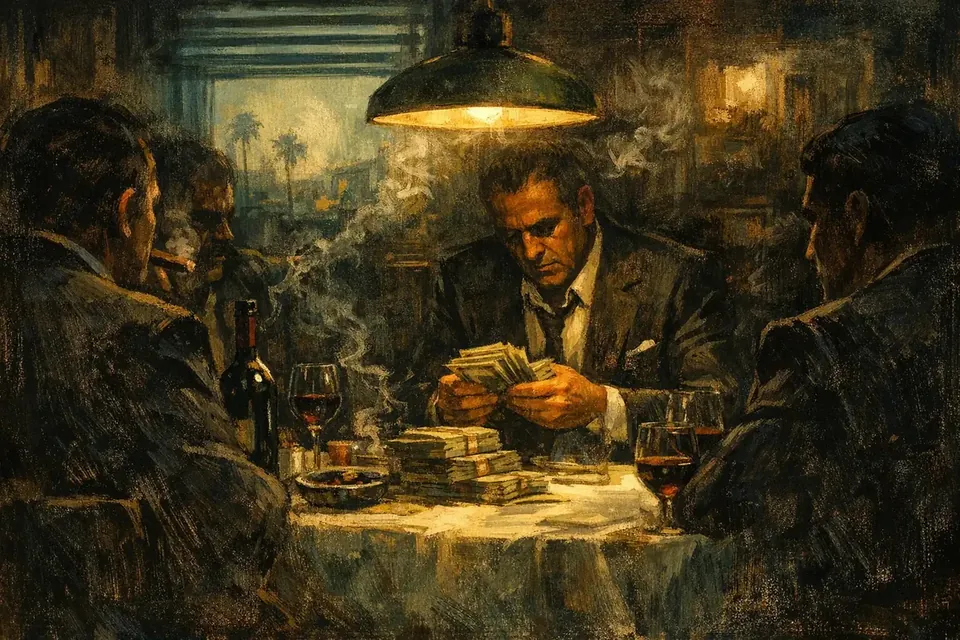
The back room of a restaurant: men in suits around a table, one counting banknotes

The underworld

At stake: the whole Ladder.

  • The desert. Without the Ferreiras, the airstrips at Sandy Shores, Grapeseed and McKenzie are used by loose crews who pay a toll to whoever is closest. Anyone who brings order to the routes becomes a cartel. There is room for two.
  • The Table. The Iturbes (the night) and what is left of the Riordans keep the Vespucci Table half standing. They are looking for partners for the empty seats, because a Table of two can't launder a cartel's money.
  • The street. Thirty-seven turfs, most of them unclaimed. The gangs that claim them level up; the ones that climb high enough will want the rung above. That is what the promotion heist is for: ally with someone above, present the plan to the Gobernación and earn the place. See rule 7.2.4
  • The traitor of the pier. Nobody found them. Every so often someone pays for a name.
Who's pushingThe new gangs, the desert crews, anyone with ambition and people.
Who fallsThose who climb without permission.
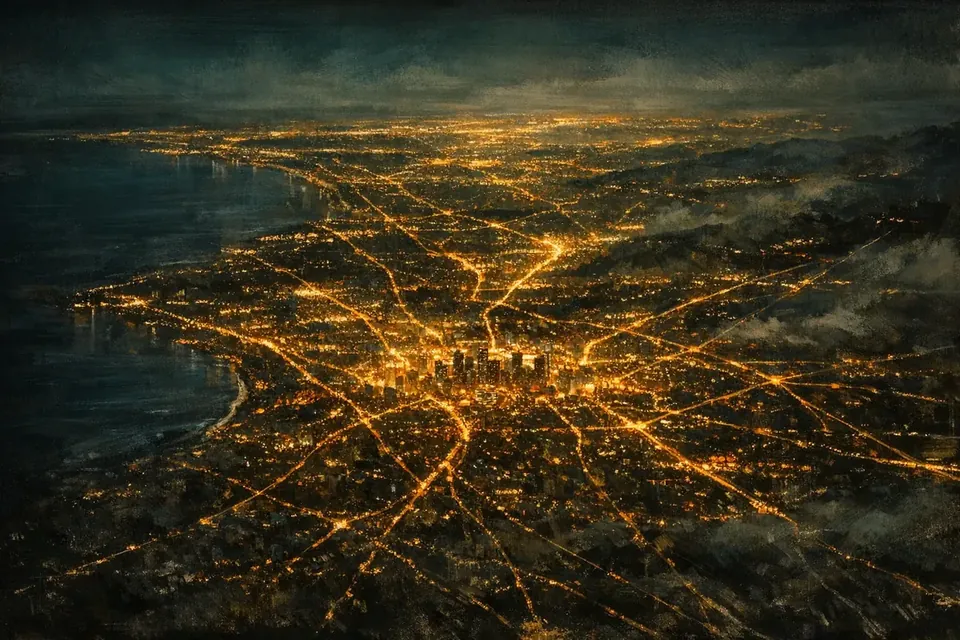
The city at night seen from very high up, its streets like veins of light

The Gobernación

At stake: who referees everyone else.

The Gobernación is as corrupt as the rest: it was born to clean up the port and ended up full of port people. The interim cabinet is split in two:

  • The port camp, who want to close the North Terminal case, hand the concession back to whoever it "belongs" to and keep charging for every promotion on the Ladder.
  • The reform camp, who want to reopen everything, from the Blue Book to Judge Hale's death, and not always out of love for justice: an open case is also a way to squeeze people.

Caught in the middle are the DOJ (prosecutors who choose which case to push, an empty seat on the Superior Court) and the LSPD, whose chief the Gobernación appoints: whoever controls the cabinet will choose who gives the orders at Mission Row. The LSPD, for its part, has a long memory: the Purge taught it that a cop in debt is a bought cop, and that the buyer is always someone higher up.

Who's pushingBoth camps of the cabinet, ambitious prosecutors, captains who want the top job.
Who fallsWhoever ends up in the middle of a case.

Chapter 04

Ordinary people

Most of the city doesn't sit in any seat. It rides the wave.

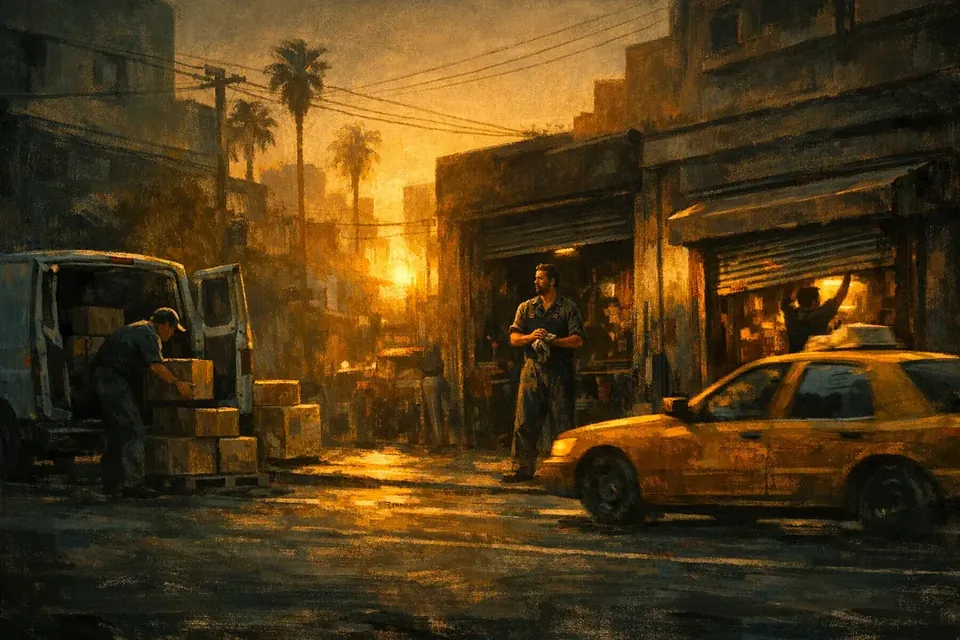
Early morning in a neighbourhood: a courier unloads boxes, a mechanic at the garage door, a yellow taxi passing

The courierwho knows every door in Vespucci and sees more than he should. One day they offer him double for a package he doesn't have to open.

The mechanicwho doesn't ask where the bullet holes come from. He's well paid and sleeps badly.

The café ownerin Legion Square who pays a gang for security and slips a cop a Christmas bonus, just in case, and serves coffee to both.

The cop with a mortgagein Mirror Park. He joined because of the Mission Row Charter and he still believes in it. Still.

The EMS doctorwho on Tuesday stitches up a gang kid and on Wednesday the cop who shot him. Ten minutes: that's what she has for each of them, without asking which side they're on.

The cab driverwho drives the judges in the morning and the people who buy them at night.

The longshoreman without a unionwaiting for someone, anyone, to tell him whether there's work tomorrow.

The one who just got off the planewith a suitcase and a story nobody knows. Yet.

For all these people an honest life is possible: the Job Office at City Hall gives you work from day one (deliveries, garbage, taxi, the mine, fishing), there are businesses that need staff, families who sign up at the Civil Registry and houses with keys of their own. And sooner or later, every one of them gets offered easy money. How all of that works: the citizen's handbook.

Chapter 05

How a newcomer fits in

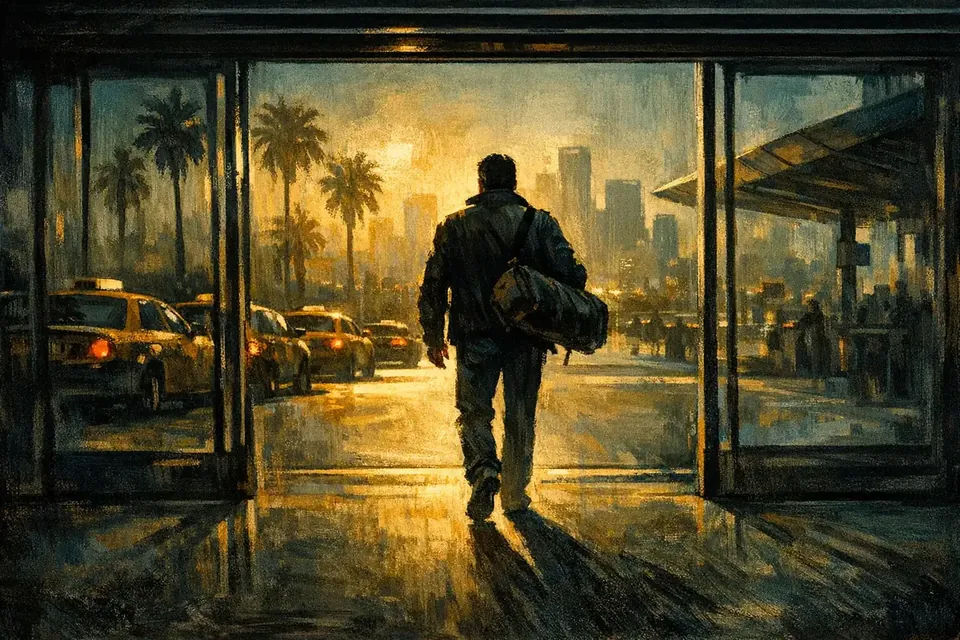
A traveller with a bag over the shoulder walks out of the airport terminal towards the city at dusk
Nobody arrives for the first timeThey come back.

Nobody arrives in Los Santos for the first time: they come back. Every new character lands at the airport after some time away; why they left and why they're back is up to each player to write. The city only adds one suspicion: a lot of people left without saying goodbye the week of the Night of the Pier. That may be your story or not. Someone may believe it is.

From there, everything is connected:

  1. A courier sees something at the port
  2. a mechanic patches the bullet holes
  3. a cop starts asking questions
  4. a gang answers with bullets
  5. out in the desert, someone takes note
  6. the Gobernación gets paid to look away
  7. a judge decides whether the case goes on

What a player does on one front moves the other two. Taking a corner changes who collects protection on the block; opening a business changes who launders; an arrest changes who climbs the Ladder; a story in the press can bring down a minister.

That is what the empty seats are: others wrote this city, and now there is room for someone else to write it.

Chapter 06

What's open

The chronicle has fixed parts and gaps left on purpose. The gaps are for the players.

What's fixed

  • The timeline of the five eras, from 1958 to March 2026, with the Night of the Pier (14 October 2019) at its centre.
  • The order of the Ladder: cartel, mafia, gang. It is also a server rule: nobody attacks upwards except through a promotion heist approved by the Gobernación, and there are two cartels at most. See rule 7.2
  • The DOJ is the Gobernación's judicial branch, and the Gobernación appoints the heads of the LSPD and EMS.
  • The historical characters are dead, in prison or out of the city. They are named, not played, unless the staff approves a role.

What's left open

  • Who the traitor of the pier was.
  • Where Nico Ferreira is and what happened to the shipment.
  • What really happened to Judge Hale and to Ana Beltrán.
  • Why each character left and why they came back: each player writes it.
  • Who fills the empty seats. All of them can be taken.
  • Whether the interim Gobernación cleans itself up or goes under.

Player organizations

  • Organizations are assigned by the administration, with their family (gang, mafia or cartel), through a donation or through story. See rule 7.1.1
  • In the story they belong to the era of the Ladder: they were founded or arrived after 2019.
  • A gang comes in through the street (unclaimed turf). A mafia, through the empty seats at the Vespucci Table: it can take one or found its own and compete. A cartel, through the desert routes: it's the Ferreiras' seat, and there is room for two.
  • The legal factions (LSPD, EMS, the Gobernación with the DOJ, businesses) hook into the provisional LSPD command, the empty seat on the Court, the Chamber of Commerce and the press. See the legal factions handbook.
  • The historical family names (Vance, Galloway, Duarte, Kessler, Riordan, Sarno, Castell, Iturbe, Ferreira) belong to the city, not to anyone: they are not used as the name of an organization without the administration's approval.

Chapter 07

Glossary

People

All historical: dead, in prison or away.

Walter "Big Walt" Riordan
Historic boss of Local 14. Died in 2002.
Frank Riordan
His grandson, boss of Local 14 until 2025. In prison for extortion.
Harlan Pierce
Governor during the Rebuild Plan; resigned in 1989 and fled by yacht.
Ana Beltrán
Kessler Trust accountant who leaked the Blue Book. Dead in 1990.
Irene Walsh
First LSPD commissioner (1991). Retired.
Tomás "the Old Man" Ferreira
Founder of the Ferreira cartel. Died in 2016.
Inés Ferreira
His daughter, owner of the routes. Died on the Night of the Pier.
Nicolás "Nico" Ferreira
His son, the way out through the port. Missing since 2019.
Tony Sarno
Of the Vespucci Table. Died on the Night of the Pier.
Dale Mercer
LSPD chief in 2019. Resigned in the Purge.
Margaret Hale
Superior Court judge. Died in 2025.
Richard Aldana
Governor until March 2026. Out of the city.
Clara Montiel
Editor of El Diario del Pacífico. Lives abroad.

Families, companies and institutions

Los Santos Port Consortium
1958: Vance, Galloway, Duarte, with the Kessler Trust.
Vance
The shipping line. Sold their share of the port.
Galloway
Cranes, later Galloway Construcciones and Galloway Logística. Still around.
Duarte
Customs and customs brokers.
Kessler Trust
The port's bank.
Local 14
The Longshoremen's Union. No boss.
The Vespucci Table
The old mafia (Riordan, Sarno, Castell, Iturbe). Two empty seats.
Ferreira cartel
Owner of the desert routes until 2019.
Gobernación
The city government; the DOJ is its judicial branch; the Los Santos Superior Court has sat since 1990.
LSPD
Born in 1991 at Mission Row. The Mission Row Charter is its charter of principles.
Metropolitan Police
The previous police force, disbanded in 1991.
Los Santos Chamber of Commerce
No president.
El Diario del Pacífico
Closed in 2024.

Events

Rebuild Plan · Blue Book · Pierce scandal
1983–1989. The earthquake fund, its second set of books and the governor's fall (1989).
Clean-Up Act
1990.
The night of Innocence Boulevard
1991: the Metropolitan Police opens fire on a strike.
Alamo Agreement
1998: desert, customs and construction.
The Night of the Pier
14 October 2019: 23 dead; Del Perro Pier in flames.
The Mission Row Purge
2019–2020.
The Ladder · the Casa de la Cima meeting
February 2020.
North Terminal case
2024.

Places

North Terminal · Del Perro Pier · Vespucci Canals
The port (Elysian Island), the pier that burned and the Table's back room.
Sandy Shores · Grapeseed · McKenzie airfield · Alamo Sea
The desert routes.
Casa de la Cima
The mansion next to the Vinewood sign.
Mission Row · City Hall in Rockford Hills · Superior Court
The LSPD; the Gobernación, the Civil Registry and the Job Office; the courts.
Innocence Boulevard · Davis, Strawberry, Chamberlain, Rancho
The south, the street.